
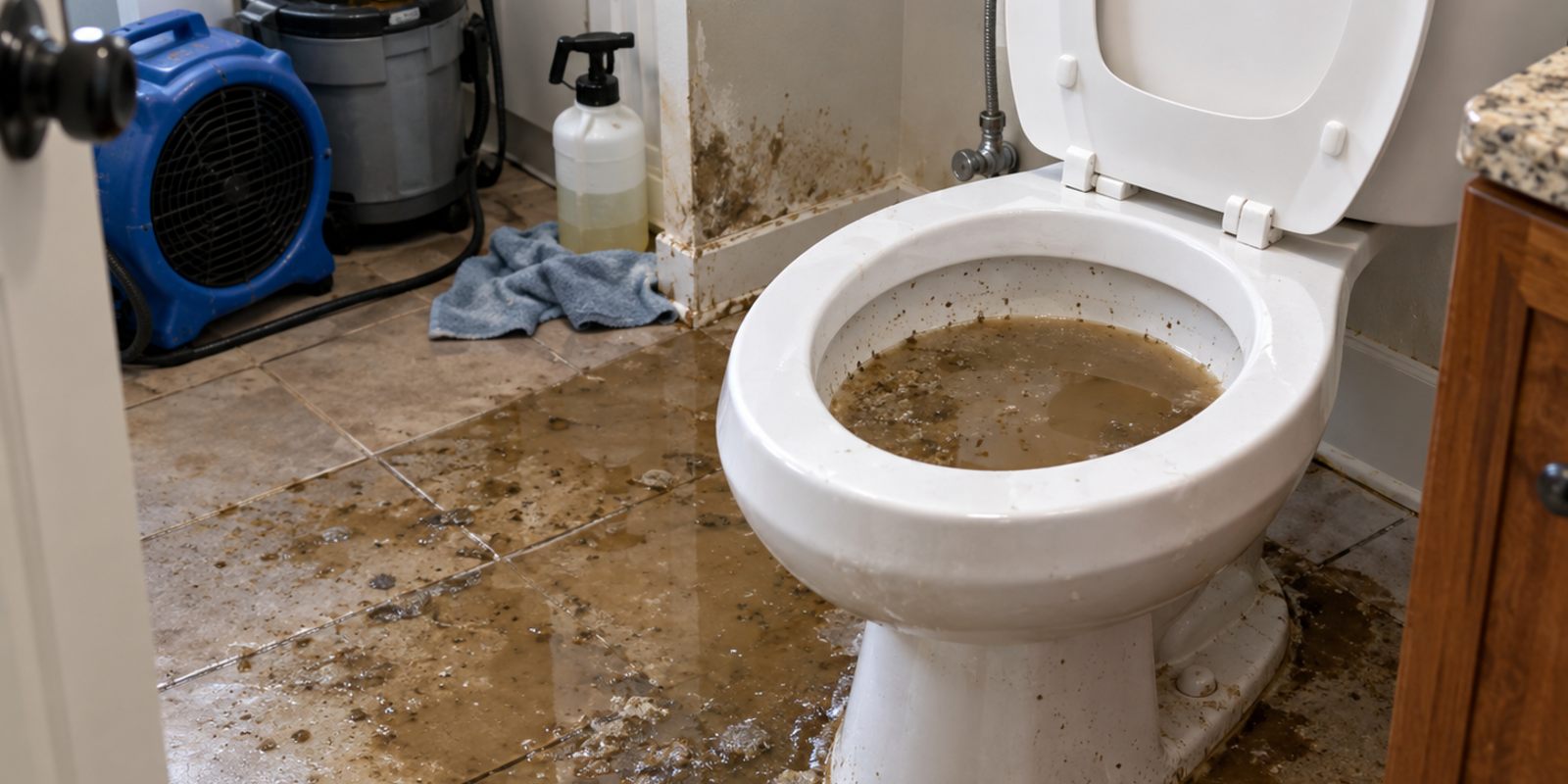
A sewage backup can leave a homeowner unsure whom to call first. The plumber and the restoration company have different roles, and knowing the difference can help you take the right next step.
Restore-It has dealt with different sewage losses over the last 14 years. During that time, we’ve seen that a sewage backup can involve more than visible damage to your home. The Environmental Protection Agency (EPA) shares that sewage-contaminated water can create property and health hazards, which is why knowing what needs to happen next matters.
Is the sewage source still active, and has the property been contaminated or damaged?
Those two questions can help determine whether you need a plumber, a restoration company, or both. Let’s look at what each professional handles and when you may need their help.
First, Stop the Sewage From Continuing to Flow
The first priority is stopping the source of the sewage, when possible and safe to do so. If contaminated water is still entering the property, the damage can continue while you decide who to call.
If the source is an active plumbing problem, a plumber may be needed to identify and stop the issue. If the source has already been stopped, the next question is whether contaminated water or moisture remains and whether the affected area needs professional restoration.
Avoid contact with sewage and keep children and pets away from the affected area. You do not need to begin cleaning it yourself. Once the source is controlled, a restoration professional can help determine what was affected and what needs to be addressed.
When Should You Call a Plumber?
A plumber addresses the plumbing problem that is causing the sewage backup. Their job is to identify the plumbing problem and repair the issue causing the backup.
This may include:
- A blocked sewer line
- A backed-up drain
- A broken or damaged pipe
- An overflowing toilet or plumbing fixture
- Another problem with the home's plumbing system
The important distinction is that fixing the plumbing problem does not necessarily address the damage left behind by the backup.
When Should You Call a Restoration Company?
A restoration company becomes involved when the sewage backup has affected the property and there is damage or contamination to address.
That may include situations where:
- Sewage has entered flooring, walls, carpet, or other building materials.
- Contaminated water has spread beyond the original fixture or drain.
- Affected materials need to be assessed to determine what can be cleaned, restored, or needs to be removed.
- Areas of the property need professional cleaning and drying.
- Contamination or odors remain after the plumbing source has been addressed.
Restore-It's role is to assess the affected areas and determine what needs to happen to address the resulting property damage. That can include cleaning, drying, removal of affected materials, and other restoration work as needed.
The plumber addresses the source. The restoration company addresses the resulting property damage.
Do You Need a Plumber and a Restoration Company?
Sometimes, yes. A sewage backup can create two separate problems: the plumbing problem that caused the backup and the property damage that resulted from it.
|
Plumber |
Restoration Company |
|
Identifies the plumbing problem |
Assesses the affected property |
|
Stops or repairs the source |
Assesses contaminated areas |
|
Repairs pipes, drains, fixtures, or other plumbing |
Cleans and restores affected materials |
|
Addresses the cause |
Addresses the resulting property damage |
Depending on what happened, a homeowner may need one professional, the other, or both.
What If the Sewage Backup Has Already Stopped?
The sewage may have stopped coming up, but that does not necessarily mean the problem is over. Once the source is controlled, contaminated water and moisture can remain in the affected area.
Sewage can leave contamination behind on flooring, walls, and other surfaces. Porous materials can also absorb contaminated water, making it harder to tell how far the damage has spread. In some cases, affected areas can extend beyond where the water was visibly standing.
Odors can remain as well, especially when moisture or contamination has reached materials that are difficult to clean or dry completely. What looks like a small, contained backup may also have affected areas underneath flooring, inside wall cavities, or in other hidden spaces.That is why stopping the backup is only one part of the response. The property may still need to be assessed for contamination, moisture, and materials that require cleaning, drying, or removal. EPA guidance notes that sewage-contaminated damage may require professional cleanup and restoration.
For more on what to do after a sewage backup and how sewage damage can affect your home, read:
 What Should You Tell the Restoration Company When You Call?
You should be ready to explain:
- What caused the backup, if known
- Whether the source is still active
- Where the sewage entered the property
- How far it appears to have spread
- What flooring or materials were affected
- Whether anyone has already attempted cleanup
- Whether electricity or other safety concerns are present
You may not know exactly what caused the backup or how far the contamination spread, and that's okay. Share what you do know. Details about the source, affected areas, cleanup attempts, and any safety concerns can help the restoration team understand the situation before they arrive.
What Happens After the Plumbing Problem Is Fixed?
Fixing the plumbing problem stops the source, but it may not address everything the sewage backup affected inside the home.
Once the source has been addressed, the next steps can include:
- The affected areas are assessed. The restoration team determines where sewage and moisture reached.
- Affected materials are evaluated. Materials are assessed to determine what can be cleaned and what may need to be removed.
- Cleaning or removal begins. The appropriate approach depends on the materials and extent of contamination.
- Remaining moisture is addressed. Affected areas are dried as needed.
- Additional restoration is completed. Any remaining repair or restoration work can then move forward.
The exact process depends on what happened and how far the sewage spread.
Would you like to take a more detailed look at the restoration process? Read below!
So, Plumber or Restoration Company?
It depends on what is happening when you discover the backup:
- The plumbing problem is still active: A plumber may be needed to identify and address the source.
- The source has stopped, but sewage affected the property: A restoration company can assess the affected areas and determine what needs to be cleaned, dried, removed, or restored.
- Both the plumbing problem and property damage are present: You may need both professionals.
Stop the Source, Then Address the Damage
A plumber focuses on where the sewage came from and how to stop the plumbing problem. A restoration company focuses on what the sewage did to the property.
In some situations, both may be part of the response. For example, a plumber may need to repair the plumbing issue while a restoration company addresses contaminated materials, affected surfaces, and moisture left behind.
If sewage has affected your home, Restore-It can help assess the damage and determine what needs to be addressed. Our team provides sewage restoration services for homeowners in El Dorado, Camden, and surrounding areas.

Topics: