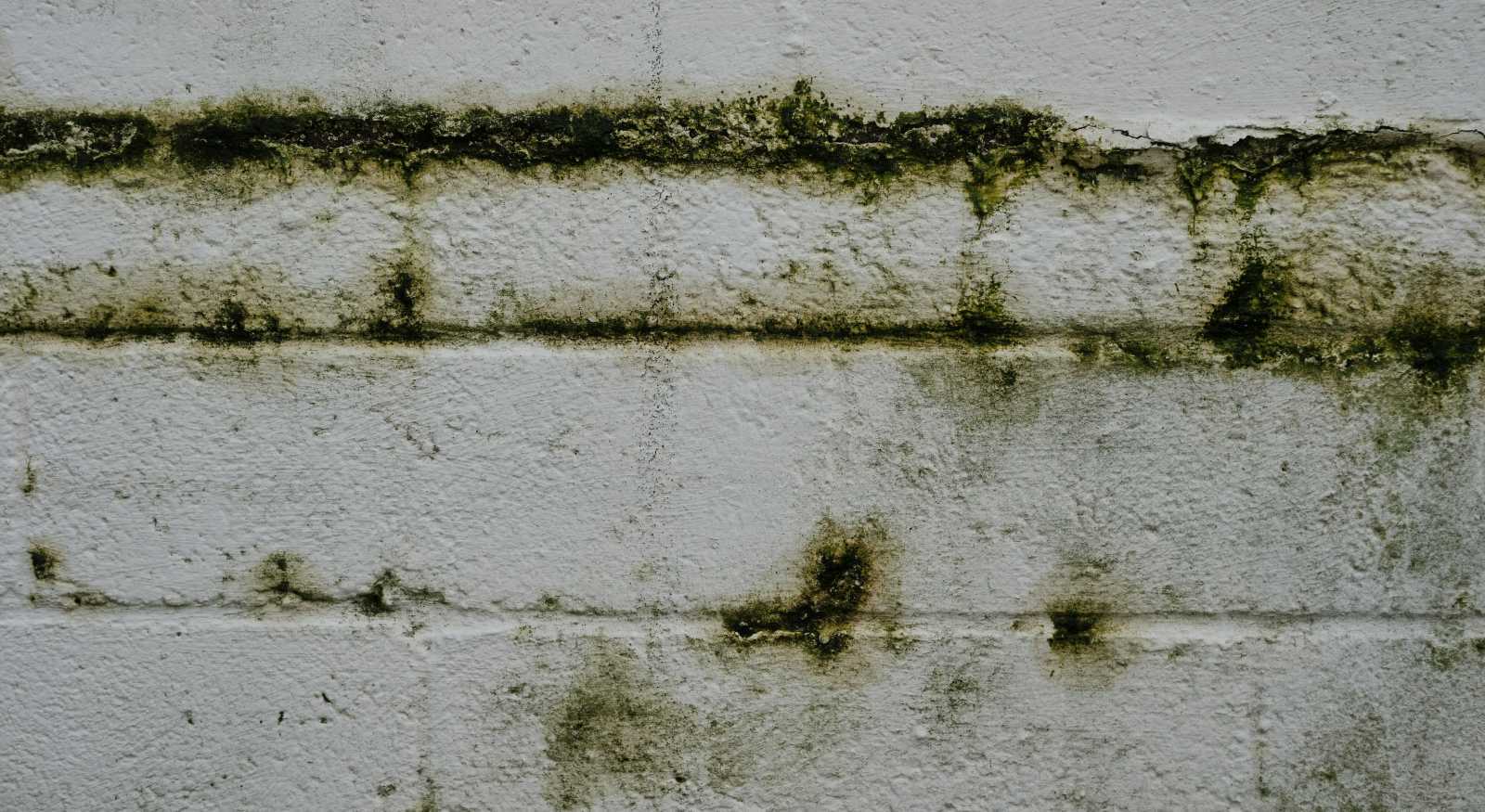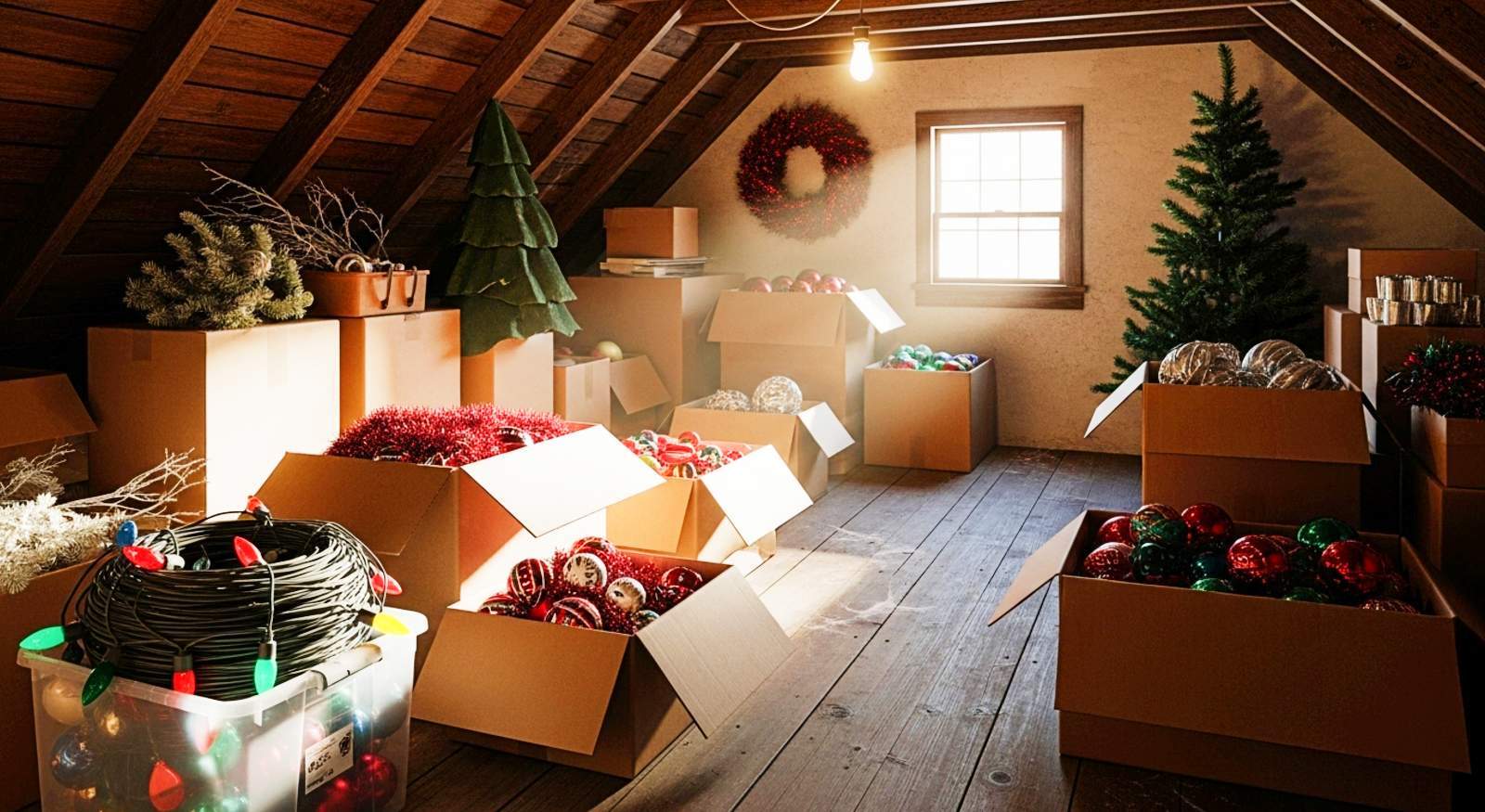

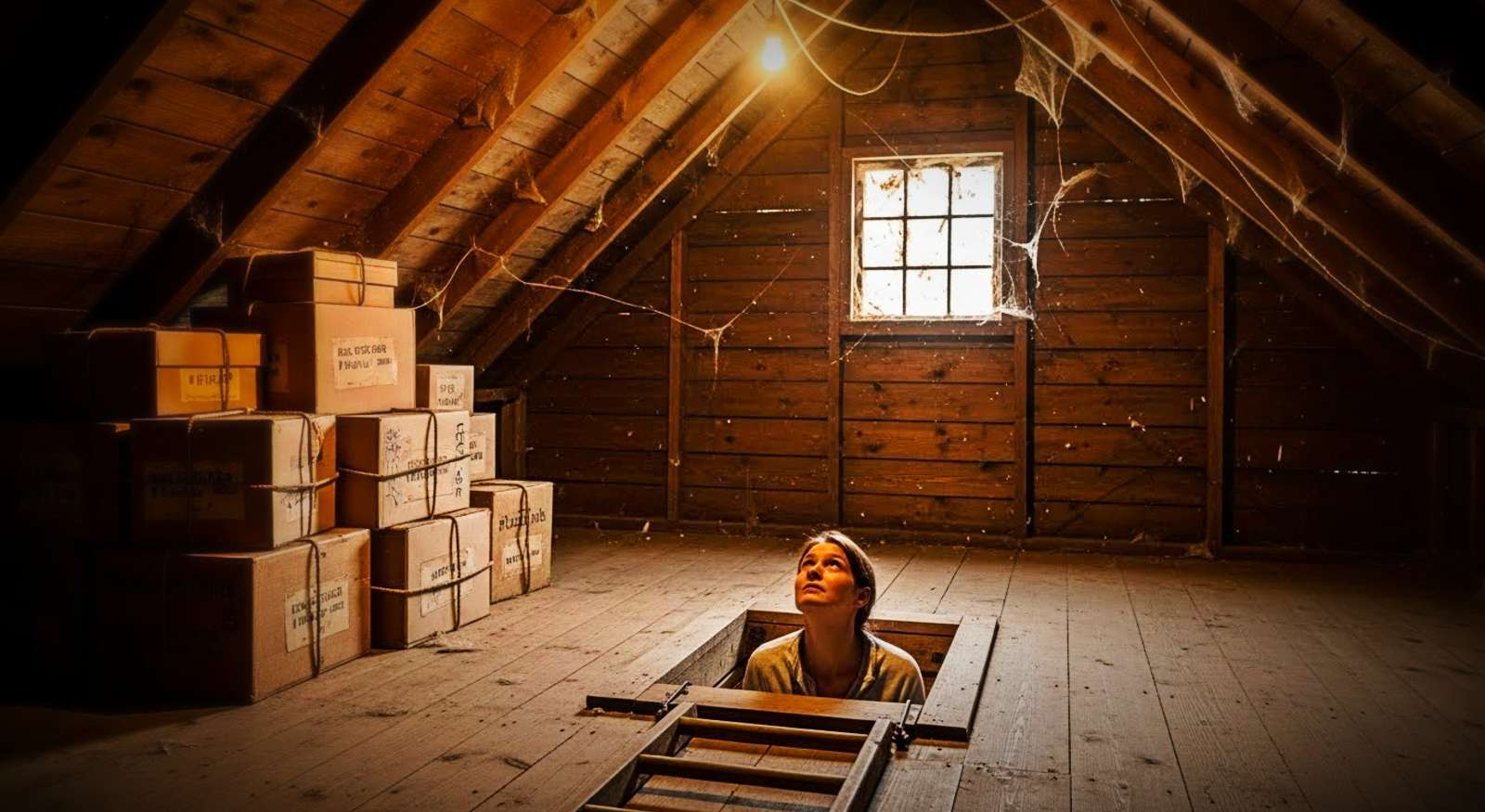
It happens during one of those cold January mornings in South Arkansas. You climb into the attic to store your holiday decorations when your flashlight hits the roof deck. Then you see them. Dark spots and fuzzy white patches are spreading across the wood. Will you need to replace the whole thing? And how much will this cost you?
At Restore-It, we have inspected many attics in South Arkansas and seen the same issues. As a mold remediation company, we know quite a bit about attics and mold, and we are here to teach you about it.
Let's break down attic mold. What causes it, tips to find the source, what to do and what not to do, and when it's time to call a professional. Join us and let’s learn together everything you need to know about mold in your attic.
Why Attic Mold Appears in Winter
In winter, we heat our homes to stay comfortable. Warm indoor air carries moisture from showers, cooking, laundry, plants, and even people breathing. When that warm air escapes into a cold attic, it cools, and the extra moisture condenses onto cold surfaces, just as it does on a cold drink. The U.S. Environmental Protection Agency (EPA) explains that mold is everywhere in nature, but it only grows when moisture is present.
Warm air rises through gaps (lights, hatches, penetrations, joints) into the cold attic. When this air hits the cold roof deck, moisture condenses. On cold nights, this moisture freezes into "attic frost," which later melts and soaks the wood, creating conditions for mold growth over time.
The key here is that attic mold is often a sign of moisture and airflow problems inside the house, not automatically a sign of a bad roof.

Is It a Roof Leak or Condensation?
Before you panic and call a roofer, do a safe visual check from the attic floor. Remember to walk in the beams and never step on the drywall.
Signs that point to a roof leak:
- Staining or mold in a small, focused area, often below a vent, chimney, or flashing
- A streaking pattern that runs downward from one spot
- Insulation below that looks matted, stained, or clearly damp
Signs that point to condensation and poor ventilation:
- Staining or thin mold growth over large areas of the roof deck
- More growth on colder, north-facing surfaces
- Many nail tips that look rusty or have dark rings
- No single obvious “entry point” where water is coming in
This checklist is not a complete diagnosis, but it can help you describe what you see and avoid paying for an unnecessary roof repair.

Why "Just Spray Bleach" is Not the Best Solution
You may see advice online to “just spray bleach” in the attic. The U.S. Environmental Protection Agency (EPA) emphasizes that the real key is removing moisture and cleaning mold from surfaces, especially porous materials like wood. It also warns that using bleach for mold removal can leave behind dead spores that may still cause allergies and other health issues.
The problem with using bleach alone is that it does not reach the mold "roots". As a matter of fact, because most commercial bleach has a high percentage of water, it can leave behind excess humidity. This only makes the mold infestation worse.
Professional remediation focuses on physical removal, drying, and fixing the source of moisture rather than relying solely on bleach or other biocides.

The Real Fix: Air Sealing and Ventilation
Cleaning what you can see is only half the job. If you do not change how air and moisture move through your home, the mold may return next winter.
To fix the problem long-term, you usually need to do four things. First, seal air leaks between the house and attic with caulk or spray foam, and weather-strip and insulate the attic hatch, so less warm, moist air reaches the roof deck. Second, make sure bathroom and kitchen exhaust fans vent outdoors, not into the attic or soffit, because sending steam into the attic is one of the most common causes of attic mold. Third, maintain attic ventilation by keeping soffit and ridge or roof vents open, and using baffles if needed to prevent insulation from blocking airflow. Finally, manage indoor humidity by using fans during showers and cooking, and using a dehumidifier if required; agencies like the EPA recommend keeping indoor relative humidity below about 50% to help prevent mold growth.
A qualified contractor or restoration company can help you check attic ventilation, find air leaks, and suggest cost-effective improvements for your home.
When You Can DIY, and When to Call a Pro
According to the EPA, if the moldy area is less than about 10 square feet (roughly a 3 ft by 3 ft patch), most homeowners can clean it themselves, provided they use protective gear and follow good safety practices.
For small areas, typical steps include:
- Wearing an N-95 respirator, gloves, and eye protection.
- Controlling dust and preventing mold from spreading into clean areas.
- Cleaning hard surfaces with detergent or a mold-specific cleaner.
- Drying materials thoroughly after cleaning.
You should strongly consider calling a professional if:
- The affected area is larger than 10 sq ft or widespread across the roof deck.
- You have family members with asthma, severe allergies, immune issues, or other health concerns.
- Insulation is saturated or must be removed and replaced.
- There are complex ventilation or structural issues that need to be corrected.
A trained professional on mold remediation will begin by locating the moisture source and fixing it. They will also follow industry standards for containment, air filtration, cleaning, drying, and clearance checks.

Next Steps To Protect Your Attic from Mold
Now you know how attic mold in winter is most likely linked to indoor moisture and airflow, rather than a damaged roof. Having read this article, your original worry about those dark spots and fuzzy patches should be a thing of the past. Understanding how condensation, poor ventilation, and high humidity can fuel indoor mold growth will give you the tools to make the right decision. Your next step is to learn about our mold remediation process.

Do you see dark spots, white patches, or rusty nails in your attic? Do not ignore them. Call Restore-It today for a comprehensive attic inspection. If we discover mold, we can create a remediation plan to help you protect your home and your health.

Topics: