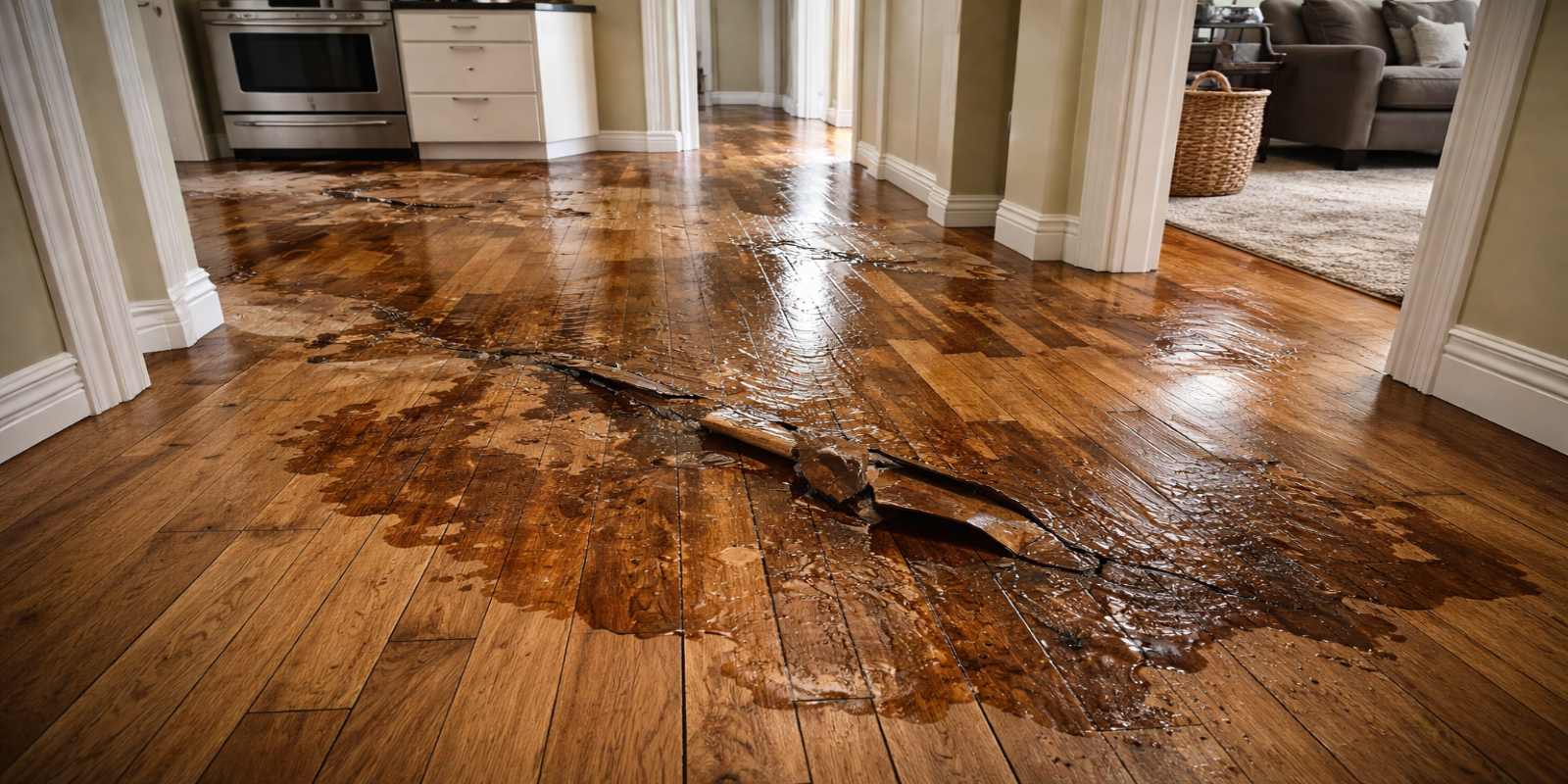


Your home is damaged by water, and you feel like your world is upside down. A burst pipe or a sewage backup has flooded your floor. You call a reputable restoration company, and they stop the damage from spreading any further. After they are done, they confirm your fears: the damaged boards of your floor must be replaced.
After speaking with your insurer and discussing your options with the restoration company, a new issue arises: your flooring has been discontinued. Will your flooring have an ugly-looking patch? Or is there something to prevent this constant visual reminder of the loss?
With more than 10 years of experience working in the restoration industry for our South Arkansas neighbors, we know this fear. Here at Restore-It, we will explain clearly and transparently how this works in our state.
In this article, you will learn what "line of sight" means in insurance claims (and what it has to do with your flooring fears). Also, how matching rules work in some states, what often happens in Arkansas, and simple steps you can take to argue for a clean, uniform look rather than a patchwork repair.
Direct Damage vs Matching and Insurance Coverage
Most homeowner's policies promise to cover "direct physical loss or damage" to your home. This means most insurers owe for what was directly damaged by a covered peril, such as sudden water from a burst pipe, and nothing more. Here is an example of an HO3 form that includes this language.
The issue is that a home is more than a set of parts. Repairs can restore function but not appearance. This can turn into a "matching problem." If only one area of your floor is affected, should the insurer replace the entire floor or just the damaged area? Should you expect the finished space to have a reasonably uniform look?
Some insurance regulators and consumer groups argue that policyholders should be given a "reasonably uniform appearance" in the repaired area, not a patchwork of colors and sheens. Insurers, however, may argue they don’t have an obligation beyond restoring the covered areas. They may even point back to the exact policy language and claim cost.
The key here is to carefully review your own policy.

Matching Rules in other States vs Arkansas
Some states have written clear matching rules into law. For example, regulations in Kentucky and Florida require insurers to consider replacing all items in an area, or even in adjoining regions, when new materials do not reasonably match the quality, color, or size of the existing items. These rules give homeowners in those states stronger support when they ask for more than a tiny patch.
Arkansas is different. "The Natural State" relies on general unfair claims settlement practices rules issued by the Arkansas Insurance Department. Those rules focus on fair and prompt handling, not on detailed formulas for how much to replace.
This means that matching in Arkansas is decided on a case-by-case basis. Adjusters will look at:
- The exact wording in your policy and endorsements
- How visible the mismatch would be in the main living areas
- The cost difference between patching and a larger replacement
There is no automatic "yes" or "no" rule. That is why documentation (such as clear photos), product information, and straightforward explanations from your contractor can make a big difference.
What "Line of Sight" Usually Means
"Line of sight" is not a magic term. It is a common phrase used by many adjusters and contractors. It means what you can see from one spot without a natural break, such as a doorway, wall, or threshold.
Imagine continuous wood flooring that runs from your kitchen into the dining and living areas, with no transitions. If the kitchen portion is ruined, the product is discontinued, and no close match exists, a small patch may stand out clearly from across the room. In that case, many contractors will argue that all flooring within that line of sight should be replaced to restore the pre-loss look.
By contrast, if the same flooring continues into a bedroom behind a door, the doorway often acts as a natural stopping point. The main open areas may qualify for broader replacement, while the bedroom is treated as a separate space.
Line of sight does not guarantee that a full replacement will be approved, but it gives you a way to explain to your insurer why a patch will be obvious in real life.
Why Your Flooring Type Matters
Your flooring type also shapes what "matching" really means:
- Solid hardwood can usually be sanded and refinished several times. When damaged boards are replaced, the whole area is sanded and refinished to match the original color and sheen.
- Engineered hardwood has a thin real-wood wear layer over a core. Some products can be sanded once or twice; others cannot be refinished safely. Whether sanding is realistic depends on the specific product.
- Laminate and many vinyl planks use a printed image layer over a core and cannot be sanded like hardwood. When they are worn or damaged, planks cannot be refinished and need to be replaced.
Because laminate and similar products cannot be sanded and stained again, color and pattern matching is critical in large, open rooms. A "near match" may be fine in a closet, but it can be very distracting in an open kitchen and living area.
When your product is discontinued, and no close match exists, it's easier to show that a small patch will leave a long-term visual scar within the same line of sight.
How Labs and Documentation Can Help
In many property claims, contractors and insurers use independent labs such as ITEL to analyze flooring samples. A small piece of undamaged board is sent in. The lab identifies the product or a similar one and checks whether it is still available. If a report shows that the original flooring is discontinued and no close match is available, it can be strong evidence that a small patch will be obvious.
Wide-angle photos that show how the flooring flows through your home are also helpful. Notes from a real estate professional on mismatches that affect value can help strengthen your claim.
None of this guarantees that the insurer will pay to replace an entire floor, but it gives you facts instead of just feelings.
Practical Steps If You Worry about Mismatched Floors
If you are worried about the line of sight and matching:
- Read your policy and any endorsements that mention replacement cost, matching, or "like kind and quality."
- Document the space before demolition goes too far. Take photos and videos that show how the flooring flows from room to room.
- Ask your contractor for realistic options based on your exact flooring type, including patching, refinishing (if possible), or replacing larger areas.
- Request a clear written explanation from your adjuster about how they are applying your policy to matching and undamaged areas.
If you still feel the offer does not align with your policy and the actual impact on your home, consider contacting a consumer advocacy group, a public adjuster, an attorney, or your state insurance department for guidance.
Protecting Your Floors And Insurance Claim
The bottom line of this article is always to check your insurance policy and ask a legal professional if you have doubts. However, understanding line of sight can help you explain your side to your insurer. Now that you know more about the concept of matching in your insurance claim, you are ready for what comes next. Learn how to read your restoration estimate in this article.

If your Arkansas home has water damage and you are concerned about mismatched floors or confusing insurance decisions, call Restore-It for 24/7 restoration services. Our team is here to help you protect your home (and its appearance) as soon as possible.

Topics: