

If your kitchen and bathroom tile floors are shining, you might think you have done your job as a responsible homeowner. However, if you assume water cannot possibly hurt what is underneath, you might catch a nasty surprise in the future.
A loose tile, a dark grout line that never seems to dry, or a musty smell near the sink or dishwasher. These are some of the signs that something is going on. Something bad for your floor and your home.
But don't panic! As experts in tile and grout cleaning and water damage restoration, we at Restore-It are here to help you.
Let's learn how bathroom and kitchen tile floors actually handle water, what role grout and mortar play, how water can reach the subfloor, what warning signs to watch for, and what steps you can take to reduce the risk of severe damage.
Is Your Tile Floor Really Waterproof?
Most bathroom and kitchen floors use ceramic tile. These tiles typically have a factory-applied glaze on the top surface. That glaze is a glass-like coating that is non-porous, so it resists water and stains and makes cleaning easier.
However, that does not mean the entire floor is waterproof:
- The glazed face is water-resistant.
- The tile body, edges, and grout joints can still absorb water if exposed.
If a tile chips or cracks, or if water reaches unglazed edges around cuts or at transitions, moisture can enter the more porous tile body. Water can also travel through grout joints, which are more absorptive than the tile itself. Many tile and flooring resources explain that ceramic tile systems are best thought of as water-resistant rather than "waterproof".
What Is Under the Tile in Most Floors?
Usually, only showers have a waterproof membrane between the tiles and the subfloor. In standard bathroom and kitchen floors, the assembly is more straightforward:
- Tile set in thin-set mortar over a cement backer board, or
- Tile set in mortar directly over a prepared subfloor
Mortar and thin-set are cement-based and porous. They can soak up water, which is not good news for preventing water damage. However, just as their porosity leads them to absorb water, it also means they can dry given enough time and airflow.
Because of that, professional restoration companies most often dry out wet tile floors and subfloors rather than replace everything, especially after short-term leaks. Air movers and commercial-grade vacuums are used to speed up the process.
The risk comes from repeated wetting over long periods. If the tile is constantly wet and never properly dries, water can reach the subfloor. Over time, this raises the chance of mold growth and wood rot.

Why Cement Grout Is the Weak Link
Standard grout between floor tiles is usually cement-based. It feels hard as stone, but at the microscopic level, it is full of tiny pores. When grout is mixed, water is added to help it pack into the joints. As it cures, some of that water evaporates, leaving small channels behind.
Grout manufacturers explain that this porosity allows cement grout to absorb water, dirt, and spills, which is why it tends to stain and darken over time if left unprotected.
Do You Need to Apply Grout Sealants?
Mapei, a manufacturer of chemical products for the building industry (including grout), recommends applying sealants to grout in wet or high-traffic areas. This solution, applied to your bathroom and kitchen tile floors, will:
- Slow down water absorption
- Make stains and mildew easier to clean
- Help reduce moisture movement into the mortar below
Again, this does not make grout or tile assemblies completely waterproof. It simply improves resistance. Sealers also wear off with time, which is why it should be reapplied according to product directions.

What If the Grout Gets Damaged?
When grout cracks or breaks out, the situation gets worse. Grout is strong in compression but has limited flexibility.
When humidity and temperature change, subfloors can move a little, and floors flex slightly when people walk or heavy appliances move. That movement can cause hairline grout cracks, missing chunks at corners, or gaps where the floor meets the tub, toilet, or cabinets. Those openings are direct paths for water. Let’s dive a little deeper into this in the next section.
How Water Reaches the Subfloor
Once water gets past the glazed tile face and grout, it can soak into the mortar bed and eventually into the wood subfloor. This is most common in a few situations:
- Toilet bases that leak or rock
- Dishwashers, fridges, or sinks with slow plumbing or supply leaks
- Bathrooms where water frequently puddles
- Mopping habits where a lot of water is left to sit on the floor
According to a document from the U.S. Forest Products Laboratory, to prevent decay fungi from becoming active, it is best to keep wood moisture content below 20%. If a bathroom or kitchen floor repeatedly gets wet and never fully dries:
- The mortar and subfloor can stay in a high-moisture range.
- Mold can grow on damp wood, paper facings, and dust.
- Over time, decay fungi can slowly weaken plywood or OSB, leading to soft spots or sagging.
Because this happens under the tile, you often do not see early damage from above. The tile may stay intact while the structure under it changes.
Red Flags on Bathroom and Kitchen Floors
You do not need tools to start spotting trouble. Common warning signs include:
- Cracked or missing grout
Any gap in grout joints, especially around toilets, sinks, dishwashers, or at floor transitions, can give a path for water into the mortar and subfloor. - Grout that stays dark long after cleaning or spills
It is normal for grout to darken when wet. If a spot looks damp hours after you mopped, that may mean the joint is holding more water than it should. - White, chalky residue on grout or tile (efflorescence)
Efflorescence is a white powder made of salts that were dissolved in water and left behind when that water evaporated. They usually indicate moisture is moving through the cement and carrying salts to the surface. - Hollow-sounding or loose tiles
If one area "clicks" or sounds hollow compared with the rest of the floor, it may indicate voids or debonding between the tile and the mortar or subfloor. Moisture is one of several possible causes a pro should investigate. - Musty odors near the floor, cabinets, or appliances
The U.S. Environmental Protection Agency (EPA) notes that moldy or musty odors are often a sign of hidden mold and moisture problems, even when no visible growth is apparent.
These signs do not prove there is severe structural damage, but they are good reasons to stop ignoring the floor and start investigating.

What You Can Do to Protect Your Floors
You may not be able to keep your kitchen or bathroom floor dry all the time, but here is how you can reduce the risk of water damage:
- Maintain grout and caulk
Repair cracked or missing grout and caulk at floor edges, around toilets, and under baseboards. Small repairs are cheaper than replacing subfloors. - Seal cement grout on floors
This is a time-consuming process, so you can ask a professional to use a quality penetrating sealer designed for grout. - Limit standing water
Wipe up spills quickly. Do not leave large puddles after mopping. In bathrooms, use bath mats rather than letting water sit on the tile. - Watch plumbing and appliances
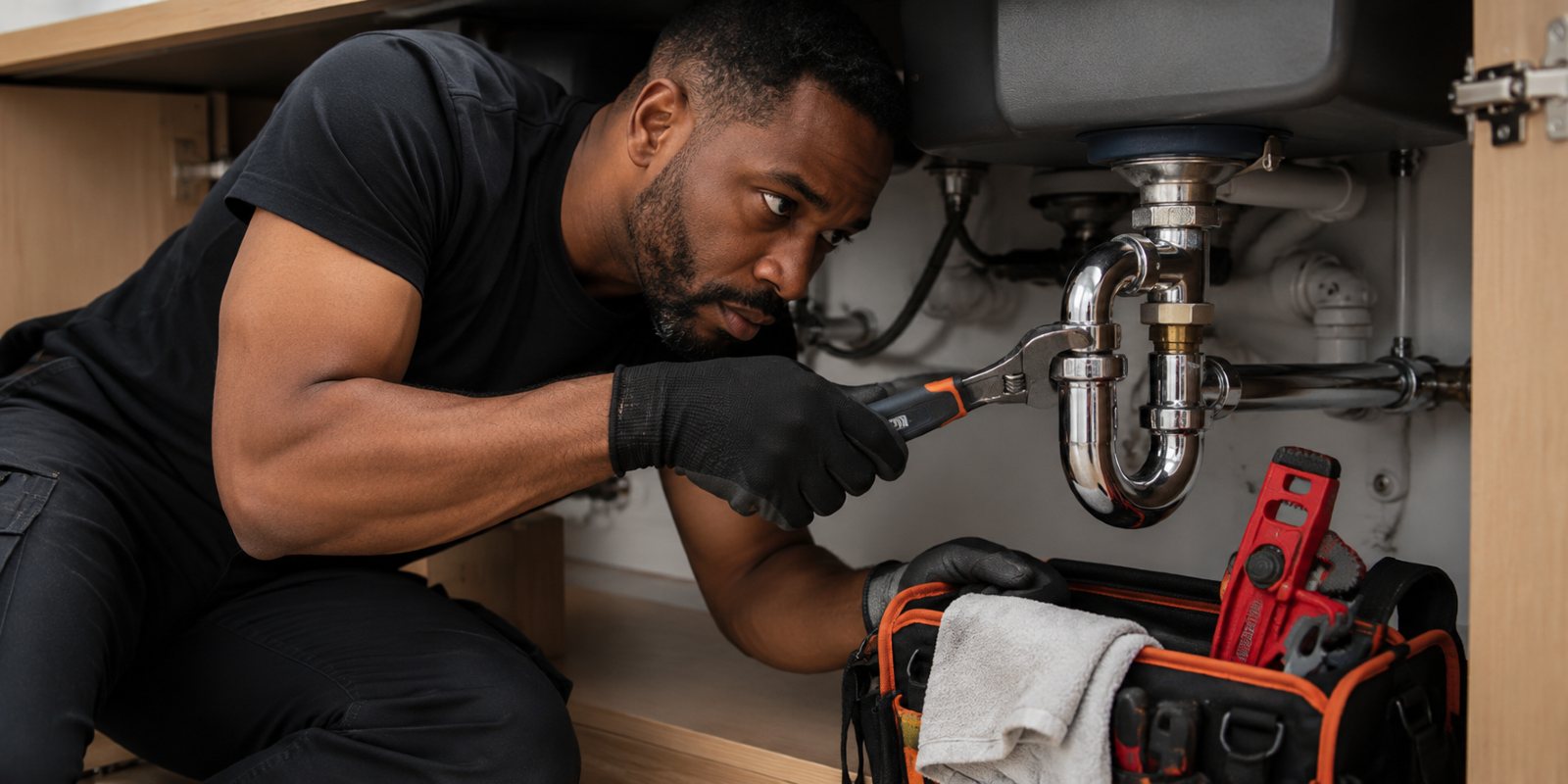
Check around toilets, sink bases, dishwashers, and refrigerators for leaks, discoloration, or soft flooring. Fix leaks ASAP. The EPA emphasizes promptly fixing plumbing leaks to prevent moisture buildup.
If you already see loose tiles, soft areas, ceiling stains below, or strong musty odors, it may be time to call a professional. A qualified water-damage company can inspect the area with moisture meters, infrared cameras, and small test openings. After that, they determine whether drying or restoration is needed.

Protect Your Tile Floors From Hidden Water Damage
Now you know that your ceramic tile bathroom and kitchen floors are water-resistant but not fully waterproof. Plus, we have discussed how cracked or unsealed grout can let moisture in. Having been taught about the warning signs (loose tiles, dark grout lines, or musty smells), you know what to do and when to call for professional help.
Your next step is to learn more in our article on water damage mitigation and restoration. And if you are looking for pricing information on water damage restoration, click here!
If you suspect water is getting under your tile or into your subfloor, call Restore-It today for a professional inspection. Our team will create a plan tailored to your home.

Topics: